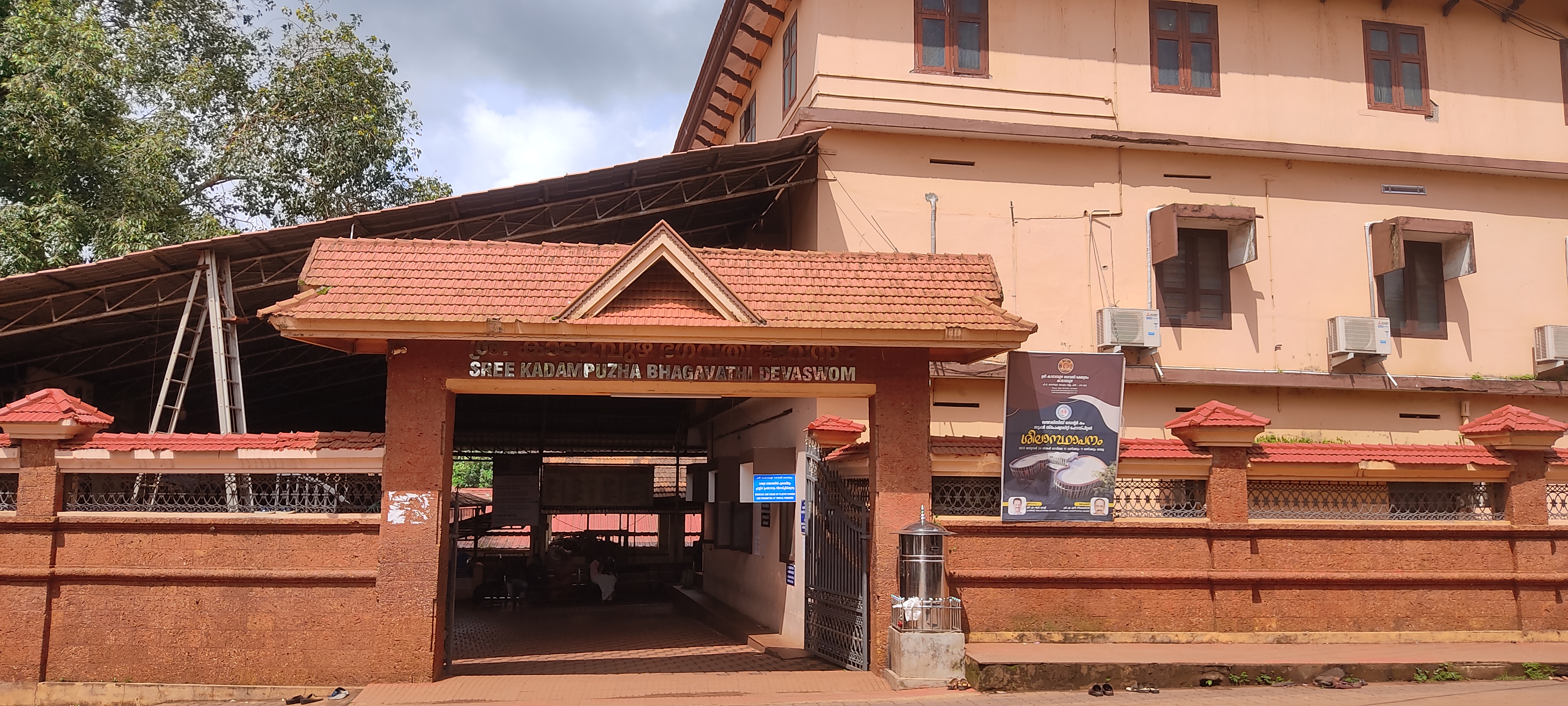
In the tranquil village of Kadampuzha, sSituated in the Malappuram district of Kerala, nestled in the peaceful village of Kadampuzha, lies a temple unlike any other—the Sri Kadampuzha Bhagavathy Temple. This ancient spiritual sanctuary stands apart in its approach to devotion, worship, and divine energy. Unlike most temples, it houses no idol, no stone image, and no anthropomorphic representation of the deity. Instead, it centers worship around a sacred pit believed to be the eternal presence of Goddess Parvati in her fiercest and most protective form: Kiratha Parvathy.
This temple isn’t just a structure—it is a living, breathing spiritual legacy, rich with mythological depth, emotional power, and energetic resonance. Thousands of devotees arrive daily, not only to witness its famed rituals but to experience personal transformation through intimate engagement with the divine.
1. The Idol-less Sanctum and Divine Origins
One of the most remarkable aspects of Sri Kadampuzha Bhagavathy Temple is its absence of a physical idol. Worship is directed instead to a natural pit (Sreekovil), located in the sanctum sanctorum, considered to be the very spot where the goddess revealed herself to Adi Shankaracharya during one of his spiritual journeys.
According to temple legend, this place marks a divine episode from the Mahabharata, when Lord Shiva, in the guise of a tribal hunter, tested Arjuna. After the encounter, Parvati remained in this sacred space in an invisible form. The fact that there is no idol reinforces the concept that the goddess is formless, eternal, and omnipresent, transcending the limitations of image and matter.
This mystical concept resonates deeply with tantric philosophy and has given the temple its revered status among spiritual seekers and scholars alike. It stands as a testament to pure energy worship, rooted in the deepest forms of devotion and surrender.
2. The Powerful Rituals: Poomoodal and Muttarukkal
The temple is especially known for two intensely symbolic rituals: Poomoodal and Muttarukkal.
Poomoodal
The word ‘Poomoodal’ literally means “covering with flowers.” In this ritual, the sacred pit is completely covered with heaps of Thecchi flowers (Ixora coccinea). It is a striking visual—a sea of vibrant orange and red petals offered as a gesture of gratitude, love, or fulfilled vows. Some offer it after prayers are answered; others, as a plea during times of hardship.
The ritual embodies a surrender of ego and an immersion in divine beauty. The act of laying down flower upon flower becomes a silent, fragrant conversation with the goddess.
Muttarukkal
Muttarukkal, meaning “breaking of obstacles,” is a ritual where coconuts are broken in front of the sanctum. Each coconut represents a specific hurdle in the devotee’s life—be it related to health, relationships, finances, or mental well-being.
The belief is that if the coconut splits cleanly into two, the obstacle it symbolizes has been spiritually shattered. If it does not, the devotee may try again another day, with more prayer and focus. The ritual is personal, powerful, and emotionally liberating, often bringing tears of relief and transformation to those who partake.
3. Temple Timings and Daily Worship Schedule
The temple’s schedule follows a sacred rhythm, creating space for worship, contemplation, and personal rituals throughout the day.
- Morning Session: 4:30 AM – 12:00 PM
- Evening Session: 3:30 PM – 7:00 PM
Key Ritual Timings:
- Muttarukkal: 5:00 AM – 7:00 AM and again from 3:30 PM – 5:00 PM
- Poomoodal: Typically between 9:00 AM and 11:00 AM
The day begins with Nirmalyam, the removal of the previous day’s offerings. This is followed by Abhishekam, where sacred items like milk, water, and sandalwood paste are ritually poured into the pit. These early morning hours are considered especially potent for prayer.
Devotees are encouraged to arrive early, especially on Tuesdays, Fridays, and Sundays, when the temple sees the highest footfall.
4. Goddess in Three Forms Across the Day
As the sun moves through the sky, the goddess is believed to manifest in three distinct divine forms, each resonating with a different energy:
- Morning: Vidya Durga – She bestows knowledge, wisdom, and clarity. Students and seekers of truth come to her during these hours.
- Midday: Vanadurga – Guardian of families, health, fertility, and harmony. Couples and families often visit at this time.
- Evening: Adi Durga (Lakshmi Durga) – She grants wealth, prosperity, and success. Businesspeople and entrepreneurs often seek her blessings before key decisions.
This spiritual evolution across the day aligns a devotee’s prayer and intent with the most appropriate aspect of the divine mother.
5. Annual Festivals and Special Poojas
The temple calendar is vibrant with powerful rituals, some of which are deeply tantric, others more Vedic and communal in nature.
Key Celebrations:
- Thrikkarthika (Nov–Dec): The grandest annual festival, filled with lighted lamps, processions, special homas, and cultural events. The entire temple glows in celebration of the goddess’s luminous energy.
- Rigveda Laksharchana: A rare and spiritually dense ritual involving the chanting of one lakh (100,000) Rig Vedic mantras for universal harmony and inner purification.
- Dravya Kalasam: An 8-day tantric ritual led by thantris and temple scholars, involving offerings of sacred materials into the homa (fire altar).
- Monthly Murajapam: Regular chanting of mantras over several days to align the temple’s vibrational field with cosmic forces.
These rituals not only elevate individual consciousness but also strengthen the collective energy of the community.
6. Dress Code and Conduct for Devotees
The temple upholds strict dress and conduct regulations, preserving the sanctity of its ancient traditions.
Dress Code:
- Men: Must wear a white dhoti (mundu). No shirts, pants, vests, or lungis. Upper body should be bare or draped with a shawl.
- Women: Allowed attire includes sarees, Kerala set-mundu, and salwar kameez with dupatta. Western attire like jeans, leggings, frocks, and skirts is strictly prohibited.
Conduct Guidelines:
- Devotees must bathe before entering the temple and wear clean, fresh clothes.
- Smoking, drinking, photography, mobile phones, and loud talking are strictly forbidden inside the temple premises.
- Absolute silence is to be maintained near the sanctum, with a mindset of reverence and surrender.
These traditions ensure that every devotee engages with the goddess in a space that is energetically clean, emotionally calm, and spiritually alive.
7. Accessibility and Pilgrim Amenities
Sri Kadampuzha Bhagavathy Temple is located:
- 16 km from Tirur Railway Station
- 23 km from Angadippuram
- 40 km from Calicut International Airport
- Easily accessible via National Highway 66 (NH-66)
Facilities Include:
- Cloak rooms and counters for storing personal items
- Spaces for flower offerings, coconuts, and other ritual items
- Basic guest houses and private lodges nearby
- Free prasadam (lunch) is offered to all devotees on most days
- Shaded waiting areas, organized queue systems, and ample parking
Despite its rural location, the temple is well-equipped to accommodate thousands of pilgrims daily, ensuring a smooth and sacred experience.
Conclusion
Sri Kadampuzha Bhagavathy Temple is not just a destination—it is a sacred mirror in which devotees reflect their deepest prayers, fears, and desires. The absence of an idol, the potent rituals, and the constant evolution of the goddess’s form throughout the day—all combine to create a uniquely powerful spiritual environment.
Whether you are a seasoned devotee or a first-time visitor, this temple offers a space for cleansing, healing, and rebirth. The experience of standing before the sacred pit, offering your fears through a coconut, or covering the goddess in flowers—can be life-changing.
For those who walk in with open hearts, Kadampuzha doesn’t just answer prayers—it awakens the soul.


Leave a Reply
You must be logged in to post a comment.